On our first full day in Kyoto we hired our guide and friend Seiki Makino, who goes by Sid when associating with English-speakers. Sid an older gentleman, retired from a career with Panasonic. We enjoyed his company and expertise last year and were looking forward to seeing him again this year.
The first place we visited, on his suggestion, was the Kyoto National Museum. He specifically wanted to show us the Kyosai exhibit, a special exhibit of paintings and scrolls by a Japanese artist. Sid said that the collection will not travel outside of Japan so it was an unusual opportunity for us to be able to see it. It also became clear that Sid wanted to show us this exhibit as part of his personal presentation of Japan and its culture to us, which was rather touching. Unfortunately (for the sake of this blog) photography was not permitted in the exhibit–not surprisingly for a museum exhibit of antique works.
The exhibit was lovely. The subjects ranged from a peaceful and startlingly detailed ink painting of carp in a pond to large, vividly colored works depicting dieties of the underworld judging the condemned. Here are a few photos taken outside the museum:
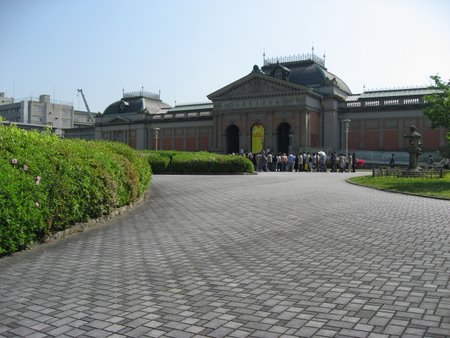
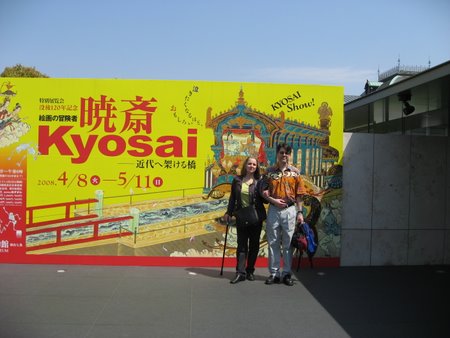
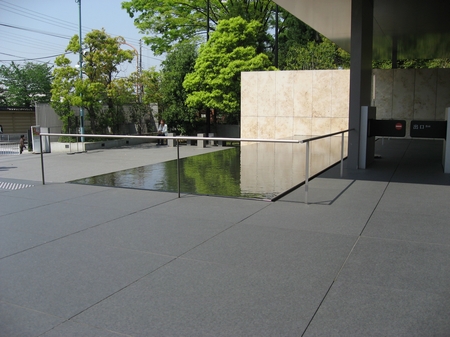
That last one is of a shallow pool near the exit, which flows almost imperceptibly slowly from one end to the other. The Japanese have such a better sense of subtlety than us Westerners.
Next we visited the Sanjusangen-do temple. The temple dates from 1164 and is the longest wooden structure in the world. It’s mostly known for housing 1000 gilded statues of Kannon, goddess of mercy. Somehow Tracie and I guessed that the statues were maybe a couple of feet tall, so we were rather surprised to find upon visiting them that the statues are human-sized. They each have nine smaller heads on top of their main head and ten extra arms. They’re arranged in rows, standing on tiers somewhat like bleachers. At their center is a larger carved statue of Kannon, about 25 feet tall, with 1000 arms. Each of the 1000 is slightly different than the others, so walking past them is a remarkable study in repetition and variation.
However, in some ways the highlight of that visit was the priest performing part of his daily rituals in front of the large statue. I’m not going to be able to convey the atmosphere he created as he chanted, struck a drum, several bells, and a wood block. He was facing the statue, not the aisle where visitors filed by, but nobody–not even the foreign tourists–could pass him without pausing to watch and listen. It was very beautiful. They burn nice incense there, too. (The incense burned in front of most temples is inexpensive and fairly coarse; this temple had better incense.)
Cameras weren’t allowed in there either so sadly I do not have any photos of the 1000. A camera would completely fail to do justice to the place anyway; you have to see/hear/smell it yourself.
Next we went to the Kiyomizo-dera temple which overlooks Kyoto from the side of a hill. Unfortunately Sid still doesn’t really understand the implications of Tracie’s condition. On the other hand, neither do most Americans, and we did tell him that we wanted to see this temple. (In retrospect we should have told him we wanted to see just this temple and the Silver Pavilion. Sid’s clearly used to guiding parties who are interested in breadth rather than depth.) The approach to the temple is a crowed, narrow, uphill street, and then you get to walk up a series of stone stairs with difficultly pitched steps. Here are photos from the approach and the initial climb:
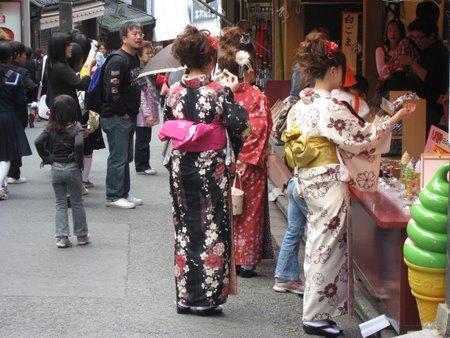
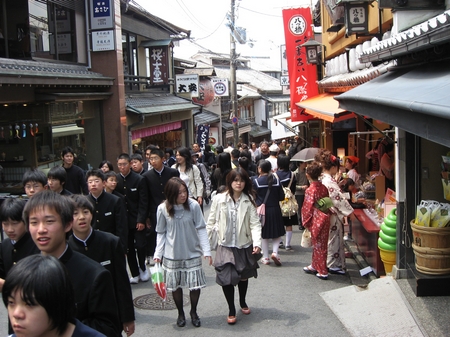
Notice the schoolboys on the left. We saw lots of groups of school children visiting temples in all of the cities we’ve been in, including on the weekend. Tamae mentioned that they visit temples this time of year as part of their cultural education. We observed that part of the assignment must include obtaining ice cream after visiting the temple.
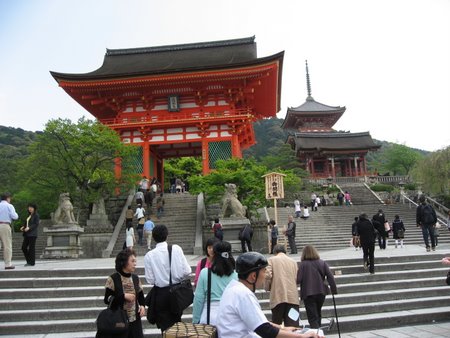
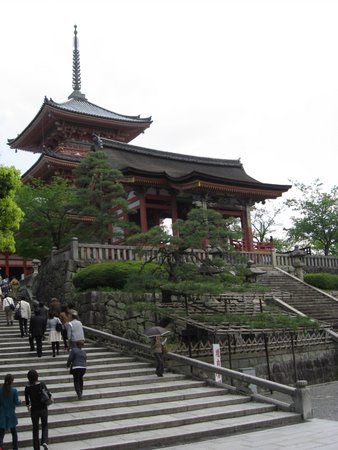


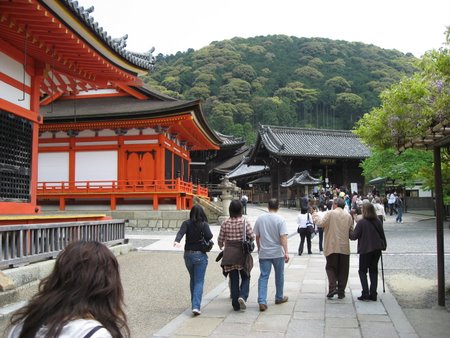
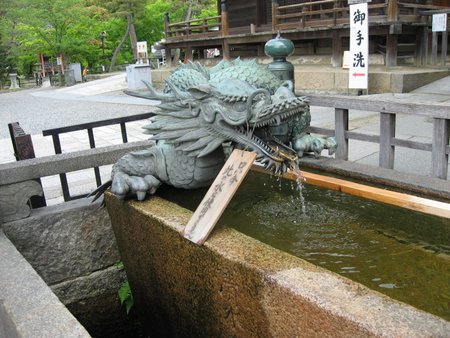
This wonderful dragon is next to the main entrance. I think that he used to be the fountain for the purification basin, but he seems to be retired now since another basin is now in use.
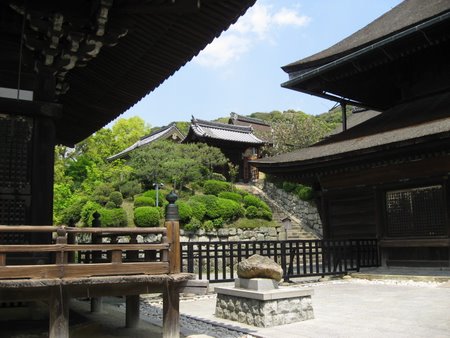
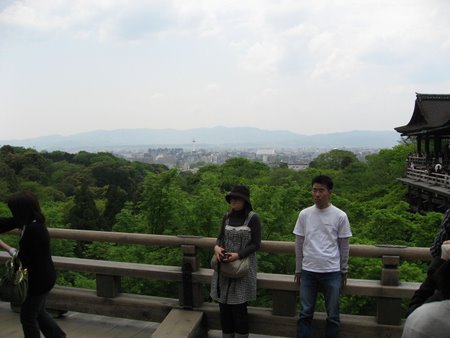
The following photos are of the temple itself and views from its verandas:


Those streams of water are from a sacred spring. Drinking from these streams is said to bring one of three forms of good fortune, e.g. love, prosperity. I don’t remember exactly what Sid said about which was which. He did say that drinking from more than one of them was a very bad idea and that you would “lose everything”.
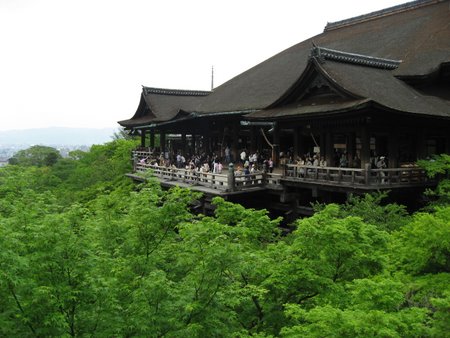
This is what keeps the temple from falling off the face of the mountain:
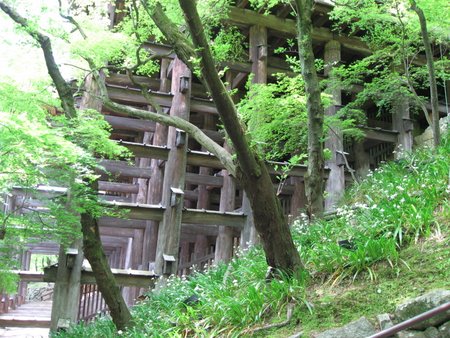

It is constructed without nails or screws. Here is part of the descent:
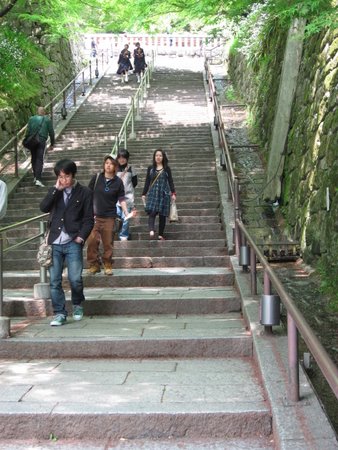
“At least it had handrails,” Tracie says.
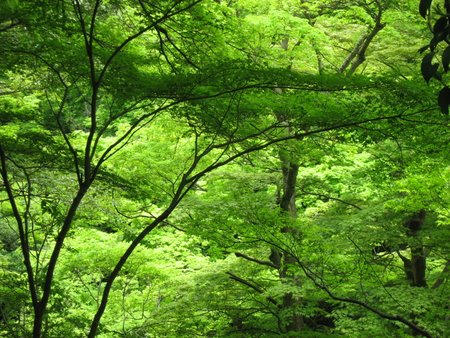
This is the entrance to the Yasaka Shrine, which we passed but did not visit:
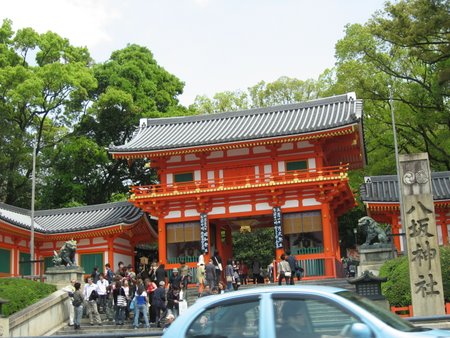
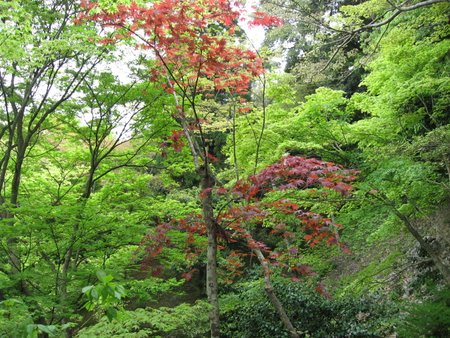
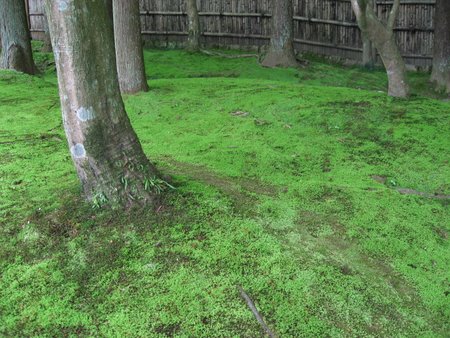
Somehow I didn’t expect that Japanese shrines and temples would use so much orange paint. Next we visited the Ginkaku-ji, the Silver Pavilion. This was built as something of a reaction to the Golden Pavilion which we visited last year. The Silver Pavilion was originally supposed to be sheathed in silver, but its sponsoring Shogun ran out of cash for the project. Nonetheless, it is considered by many Japanese to be more beautiful than the Golden Pavilion because of its less garish, more naturalistic wooden appearance. Sadly, though, it is currently under reconstruction and is shrouded in tarps and scaffolding. That’s fine–we’ll come back and see it some other time. The gardens around it are beautiful and feature elaborately raked sand and the greatest variety of moss I’ve ever seen in one place (which is saying something, given that I grew up in Oregon). This is the approach to the temple and gardens; note the huge camelia on the right:

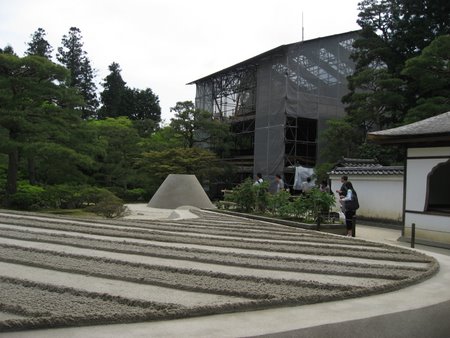

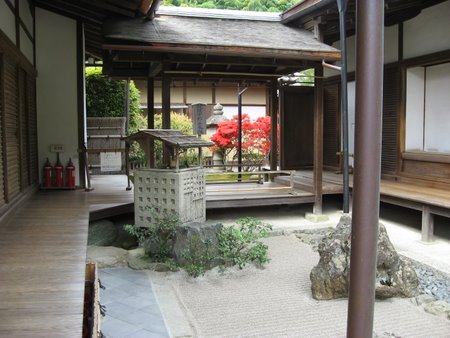
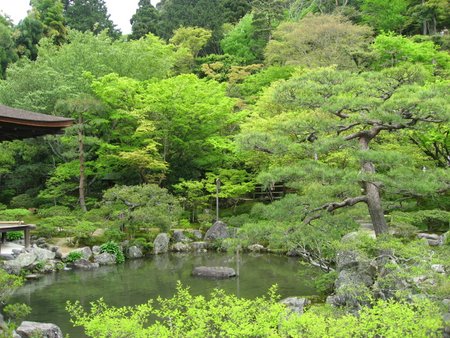
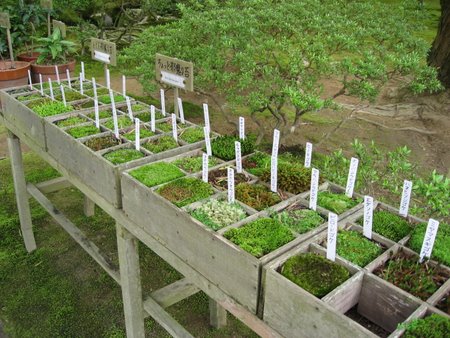

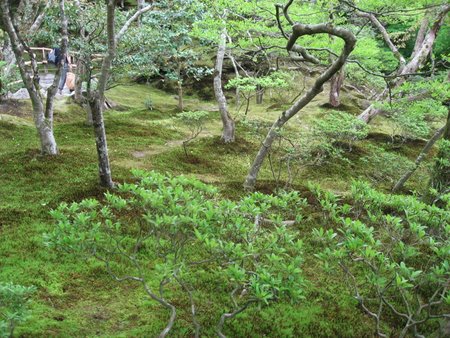
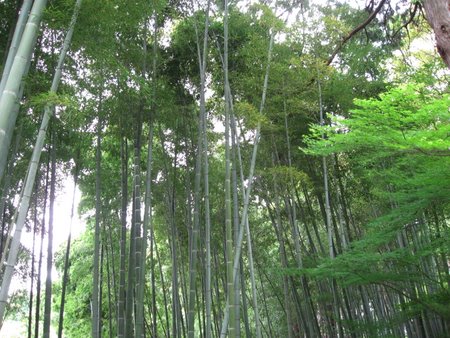
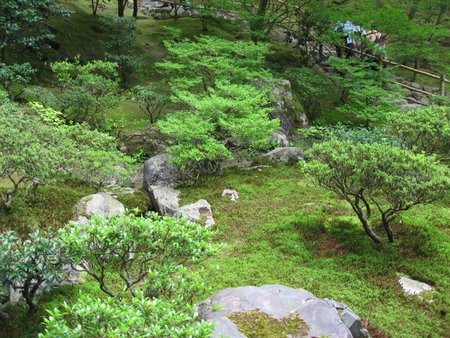
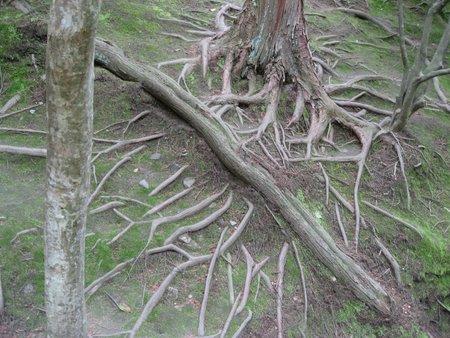
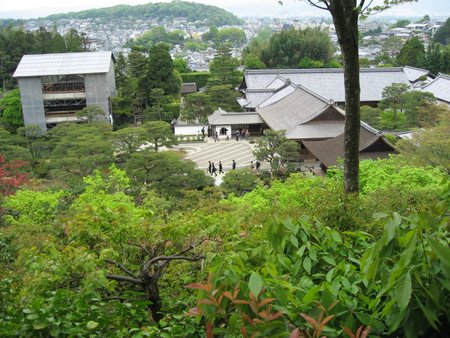

The gardens that overlook the temple are reached by a steep, stone path, an example of the class of pedestrian features that Tracie describes as “cripple traps”. She did not make the ascent. Instead she sat and observed the sand garden and temple, and had her photo taken by a pair of Russian tourists.
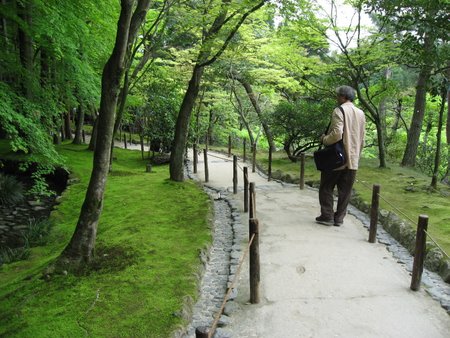

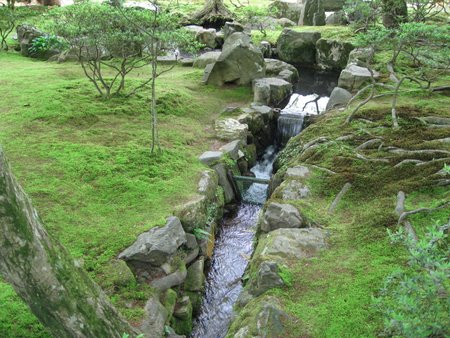
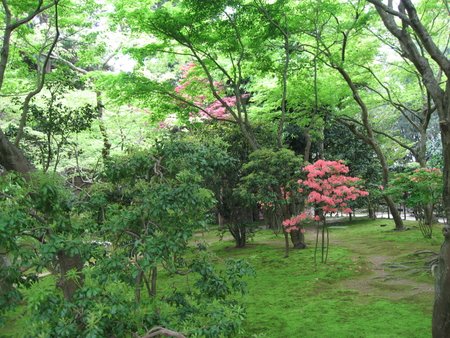
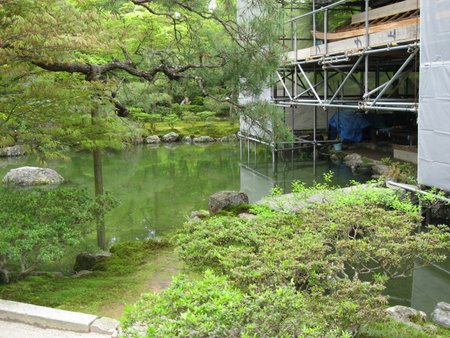

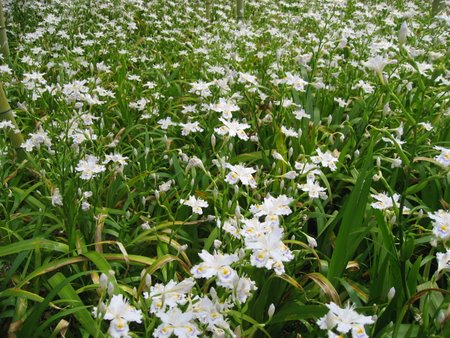
After leaving the temple we stopped at a couple of places along the Philosopher’s Walk. This is a path named after a famous professor of philosophy at Kyoto University, who walked it daily.

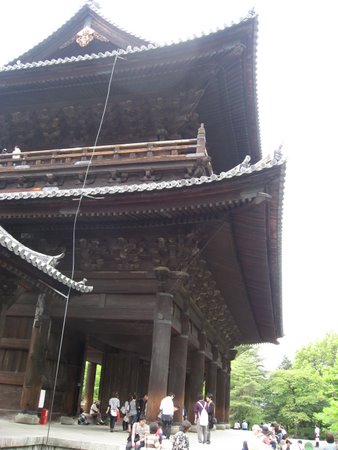
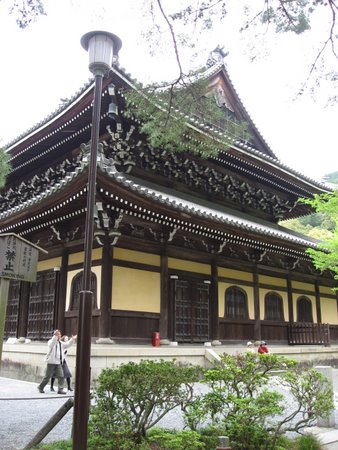
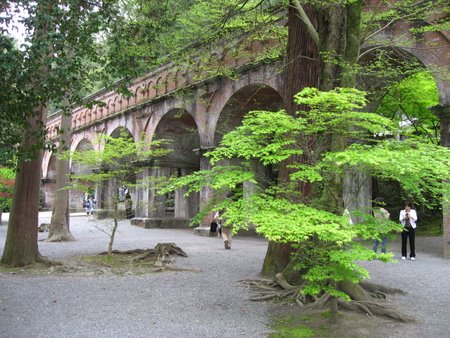
Last we briefly visited the Nanzen-ji temple, one of the most famous Zen temples. It’s been around since 1386. By the time we got to it Tracie was almost completely worn out and I wasn’t doing much better. Somehow Sid, in a well-meaning attempt to reduce our taxi fees, had elected to skip lunch. It was now after 3:00PM and we hadn’t eaten much of anything since 7:00AM. But we took a brief look at the temple and its strangely out-of-place-looking aqueduct. The first picture is of the main gate.

On the way back to the hotel we drove through the Gion district, which is Kyoto’s best-known geisha quarter.

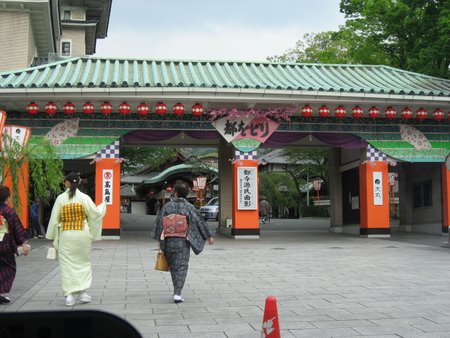
This is the main dancing exhibition hall. No, those women probably aren’t geisha. I presume the geisha are all indoors during the day, resting and preparing for their nightly entertainment engagements.
Now we’re heading for the Kyoto Handicrafts Center.
